Mississippi Gene
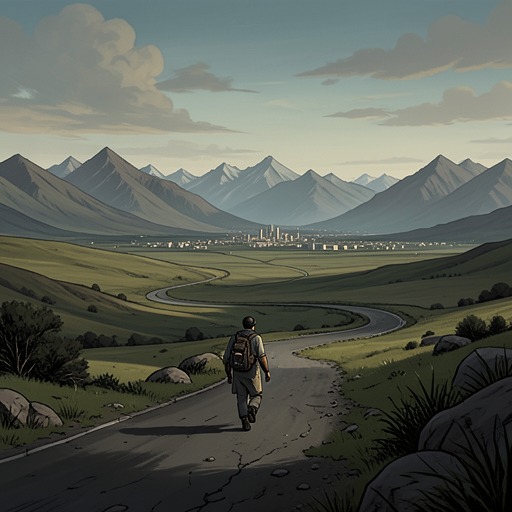
On the RoadMississippi Gene is a thirty-year-old freight-train hobo from Green-ville, Mississippi, whom Sal meets on his 1947 journey west. He travels with a sixteen-year-old runaway in his care, and his quiet patience gives the road a different register from the fever of destinations: movement is not only an adventure but also a way of living for someone with no lasting place to stay.
Identity and Introduction
Gene appears among the people Sal encounters while crossing the country, sitting cross-legged on the boards and watching the fields pass for hundreds of miles without speaking. His face and demeanor resist easy categorization: he is described as a little dark, with a youthful look that makes his age difficult to guess, while his speech is slow and melodious. When he eventually asks where Sal is headed, the question opens a conversation at the pace of the journey itself. Sal says Denver; Gene replies that he has a sister there, whom he has not seen for several years.
His itinerancy is extensive but not presented as a record of achievement. He has traveled around the country so many times that he cannot count the trips on his fingers and toes. The repeated crossings are a condition of life, not a triumphant itinerary: he moves because he has no place where he can remain without growing tired of it, and because, as the narrative puts it, there is nowhere to go but everywhere.
Care for the Runaway
Gene’s companion is a tall, blond sixteen-year-old dressed in the soot-blackened, dirty clothes of a railroad hobo. The boy is silent, stares straight ahead, and wets his lips with anxious concentration; Sal reads his manner as suggesting that he may be running from the law. Gene says the boy got into trouble in Mississippi and that he offered to help because the boy had never been on his own. He takes responsibility for him, explaining that he looks after the child as best he can.
This care distinguishes Gene from the more insinuating Montana Slim, whose long grin makes Sal uneasy and whose advances the others ignore. Gene does not make a show of his authority over the boy or insist on a story from him. His protection is practical and understated: he keeps the young runaway beside him as they travel, speaks for him when necessary, and treats his vulnerability as a reason to help rather than an occasion to pry.
The Road and Its Companions
During the ride across the plains, Gene’s attention is measured against the scale of the landscape. He turns from his long silence to say that the plains remind him of Texas; when Sal asks whether he is from there, Gene clarifies that he is from Green-ville, Mississippi. The exchange makes his presence feel at once rooted and mobile: the country’s open spaces prompt recognition, but no single region holds him.
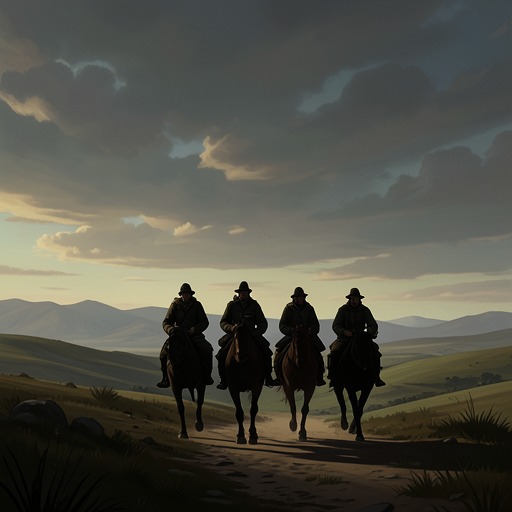
The truck ride grows rough as the road becomes humped in the middle, with soft shoulders and deep ditches. The vehicle bounces and teeters, yet its drivers push it toward Colorado; under the emerging stars, Sal feels the exhilaration of finally moving west. Gene remains cross-legged and patient through this change in pace. His steady bearing supplies a quiet counterpoint to Sal’s excitement, while his remark about the plains turns the passing landscape into a personal association rather than merely a stretch of ground to cross.
Gene also makes small, concrete provisions for getting through the night. At Ogallala, after the travelers stop and the temperature falls, he advises everyone to bundle under the truck’s large tarpaulin or risk freezing. They share what remains of the bottle as they climb into Wyoming, where the air is cold enough to sting their ears and the stars seem brighter. The scene joins his experience of the road to a simple form of mutual care: he knows how to endure the journey and passes that knowledge to the people traveling with him.
Song, Separation, and Significance
Under the tarpaulin, Gene sings in a quiet, melodious voice about a pretty sixteen-year-old girl, how far he has been, and his wish to return to her after losing her. Sal tells him the song is beautiful; Gene answers that it is the sweetest one he knows. The song gives the otherwise reserved traveler a brief means of expressing distance and loss, without turning the journey into a promise that he will return. Its longing sits beside the practical fact that he keeps moving.
Before their roads diverge, Gene wishes Sal well, hoping he reaches his destination and is happy there. Gene answers that he always manages somehow and moves along one way or another. The exchange is modest rather than conclusive: Sal is headed to Denver, while Gene’s habit is to continue onward. In the larger road narrative, Gene makes visible a life outside the ordinary expectation that travel ends in a settled home. His perpetual motion carries freedom, but it also bears the weight of rootlessness; his attention to the runaway and his quiet song show the attachments and losses that persist even when a traveler keeps going.